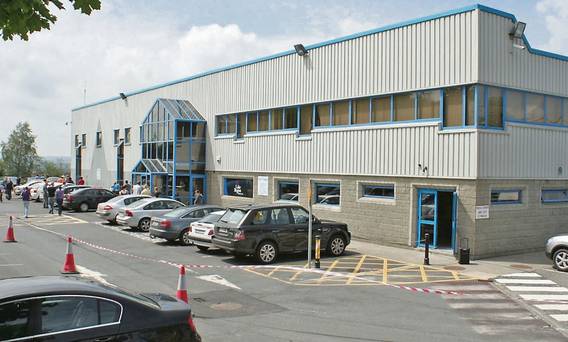
Energy management system support at Dell EMC
At Dell EMC, Energy Analytics provide ongoing support to the extremely active energy team from a management system perspective. Energy Analytics engineers take responsibility for the planning and operation of a ‘Gemba’ based energy team meeting structure whereby energy team members meet on a monthly basis at the locations where significant energy users are based within the facility. A web based software tool is utilised on screens throughout the site to capture events during these meetings. Each area owner takes control of the tool during each meeting thus ensuring ownership is dispersed throughout the facilities key energy consumers. Energy analytics engineers work with each area owner prior to each meeting to ensure they are prepared as regards their meeting content and future work post meeting. They also assist area owners to identify, quantify and verify energy savings where required. Energy analytics engineers also manage the internal audit programme for the Dell EMC energy team. The energy analytics team have in the past two years streamlined this process such that it has been noted as an exemplary area during external certification audits.


Compressed Air optimisation at Johnson & Johnson Vision Care
Energy Analytics carried out a special investigation of the compressed air system at the Johnson & Johnson Vision Care manufacturing facility in Castletroy, Limerick. Compressed air is a critical utility and is one of the main energy users on the site, accounting for around 21% of the facilities total annual electricity consumption. The objective of the investigation was to quantify the energy, and subsequently the costs, of delivering compressed air to the end-users, while also identifying an opportunities programme that can be followed to achieve energy savings. A comprehensive study of the process included reviewing the generation, distribution and end-use of compressed air was conducted. As a result of the study savings in excess of €150,000 were identified due mainly to a bespoke optimised control logic derived through machine learning techniques applied by energy analytics, as well as more routine saving opportunities to do with ducting in fresh air, challenging set points and identifying leaks.
Special Investigation into the Operation of Test Areas at EMC
A special investigation into the operation of the EMC test areas was carried out with a particular focus on the information technology (IT) loading of these areas. A DMAIC (define, measure, analyse, improve and control) methodology was employed by Energy Analytics engineers to conduct the special investigation in an efficient and repeatable manner across all areas. Through a blended approach of meeting with subject matter experts, performing walkthroughs of each area and reviewing supporting data and associated documentation, the current state of operations in each area was documented and distilled into a set of standard operating procedures (SOPs) for each Significant Energy User (SEU) under investigation. This process also resulted in potential energy saving opportunities being identified. A data availability assessment was carried out by conducting an in-depth review of the software systems utilised by each area owner to operate their respective area, as well as a quality assessment of this data. An analysis was then performed to develop Energy Performance Indicators (EnPIs) that could more accurately report on the area’s activity than had previously been possible using Power Usage Effectiveness (PUE).
ISO 50001 Maturity Assessment at EMC
EMC operates an ISO 50001 compliant Energy Management System (EnMS) at its Ireland Centre of Excellence in Cork. The EnMS is designed to encourage continual improvement in energy efficiency, however, it is common for a system to become static after many years of operation. Energy Analytics sought to reinvigorate the EnMS in order to reap rewards in terms of increased and sustained energy savings. Energy Analytics carried out an assessment of the level of maturity of the EnMS so as to establish a benchmark for improvement and identify elements of the system that required particular attention. Using a model developed by Energy Analytics, the maturity assessment found that all the pillars of the EnMS were ISO 50001 compliant, but there was also significant scope for improvement in order to make the EnMS more dynamic and effective. The maturity assessment model was used to construct a roadmap towards improved future state of operations. Target maturity levels were set for each pillar of the EnMS and corresponding action plans were created. All target maturity levels were met at the end of this process by completing the action items specified in the roadmap, with Energy Analytics carrying out the improvement works where feasible. This included developing a new internal audit template and integrating it into local software, overhauling the energy management automated reports, developing an A3 energy review and waterfall diagrams for improved communication.
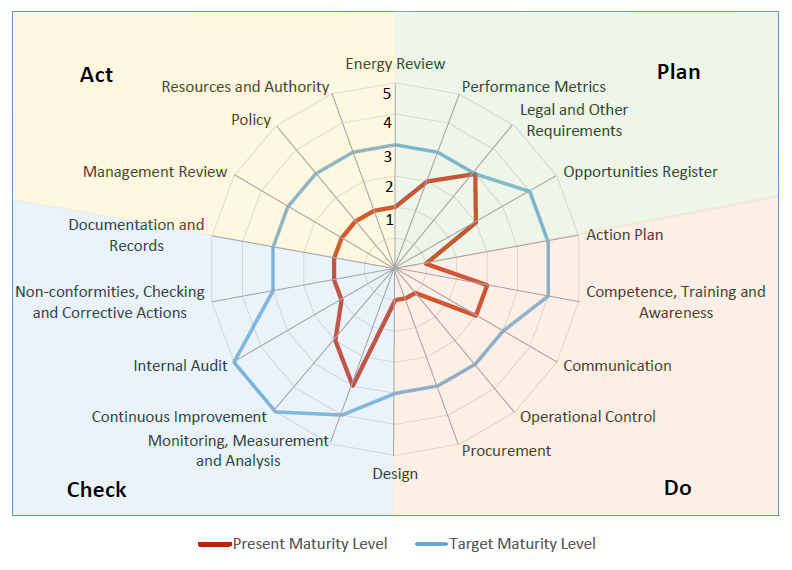
Dell EMC Energy Management System Maturity Model
Energy Management System Requirements Specification at Honeywell
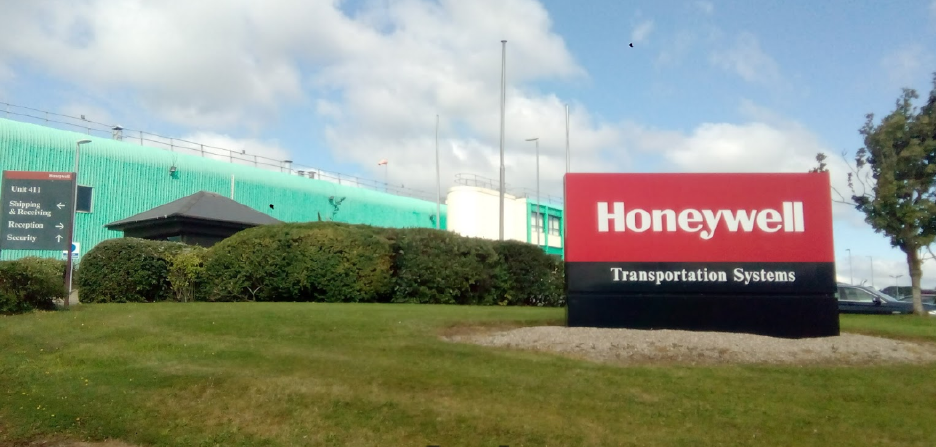
At Honeywell Transportation Ltd, Waterford, the Energy Analytics team conducted a study on the requirements and specification of an Energy Measurement System (EnMS) to be implemented. The EnMS will continuously monitor, store and report energy usage of each SEU from both electrical and thermal sources, generating energy reports which will target and track energy usage and performance. To help accomplish this, new Energy Performance Indicators (EnPIs) for the site’s Significant Energy Users (SEUs) were developed. A thorough analysis of the current practices for energy management on-site was conducted, detailing data availability and processes required to generate any EnPIs which are in use at present. Several gas and electricity meters on SEUs feeding information to the existing BMS were identified, as well as production data that kept track of raw materials, manufactured parts and scrap as they move through the plant. A list of energy reports which are required to comprehensively manage SEUs’ energy use was created. These reports will be automatically generated either on a periodic basis (Routine Reports), or when certain threshold limits for EnPIs are exceeded (Exception Reports). Additional recommended requirements for the system were also given, including security, performance and training concerns.
One‐Day Observational Energy Assessment at Lake Region Medical
On behalf of Electric Ireland, Energy Analytics carried out a one‐day observational energy assessment at Lake Region Medical’s manufacturing facility in New Ross. The objective of the assessment was to quantify and document energy consumption at the facility, while identifying opportunities for energy savings to be made. Energy Analytics then attempted to prioritise the opportunities from the greatest to the least cost effective such that an achievable action plan can be devised by the site. In excess of €130,000 per annum of energy saving opportunities were identified as part of the one-day energy assessment and were submitted to be reviewed by the site to determine priorities. Recommended actions that should be progressed immediately included a full review of the BMS and Air Handling Units to find faults (as several broken dampers were observed) and to establish airflows to aid in monitoring. A move to changing the filters of the Air Handling Units based on their condition rather than time in use was also recommended, as it would result in savings in both materials and labour associated with the change out. Other opportunities identified included: Implementing a floating condenser set point with the refrigeration service provider for chilled water generation; Review compressed air users and assess the opportunities to reduce the compressed air pressure; Discuss set back opportunities in cleanrooms with Quality Personnel; A feasibility study on installing a geothermal heat pump system to provide both heating and cooling simultaneously.